DrivePro Auto DrivePro Auto

How Long Will a Tractor Wheel Rim Last in Salty Soil 7 Tips?

Time:2026-10-14 Author:Sophia
0%

How long will a tractor wheel rim last in salty soil? The honest answer is less certain than a product label suggests. A precise number would be dishonest. In mild exposure, a coated steel rim may serve 8–15 years. In wet, high-salinity fields, serious corrosion can appear within two or three seasons. Saltwater trapped behind the rim, around valve holes, or beneath flaking paint accelerates damage. Rust is rarely uniform. That makes inspection essential.

What is the lifespan of a tractor wheel rim in high-salinity soil? It depends on salt concentration, moisture, rim material, coating quality, tire pressure, and cleaning habits. Dr. Robert G. Kelly, a corrosion scientist at the University of Virginia, has stated, “Corrosion is an electrochemical process.” His point matters here. Salt and water create a more aggressive electrical pathway across exposed metal. However, this guide does not treat every rim equally. Galvanized rims, painted rims, and damaged steel rims can age very differently.

This article presents seven practical tips for extending rim service life. They include washing salt residue, drying hidden surfaces, checking bead areas, and repairing coating damage early. Look closely near welds. Inspect after muddy work. Replace severely pitted rims before failure becomes possible. A rim may look sound from a distance while thinning internally. I have also seen maintenance advice become too confident. Real fields are inconsistent. Rainfall changes. Soil stays wet longer than expected. Therefore, use these tips with manufacturer guidance and qualified inspection, especially when cracks, deep pits, or repeated air loss appear.
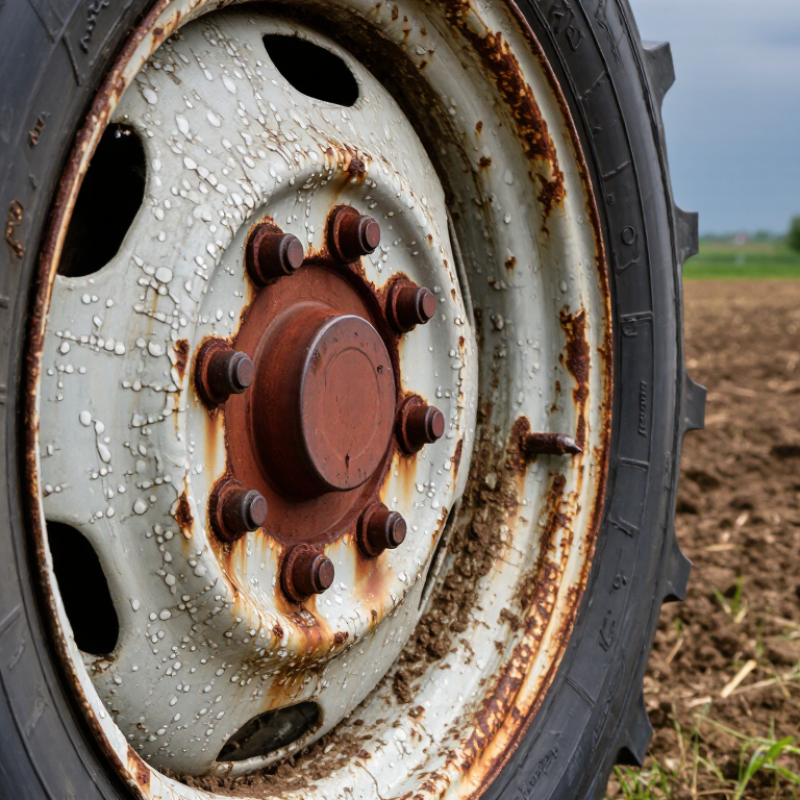
How Long Will a Tractor Wheel Rim Last in Salty Soil 7 Tips?

Define Salty Soil Using the USDA’s 4 dS/m ECe Salinity Threshold

How Long Will a Tractor Wheel Rim Last in Salty Soil? 7 Tips

Define Salty Soil Using the USDA’s 4 dS/m ECe Salinity Threshold

The USDA NRCS classifies soil as saline when saturated-paste electrical conductivity reaches 4 dS/m ECe or higher. ECe means electrical conductivity measured from a saturated soil extract. It indicates soluble salt stress, not a guaranteed rim failure date. That distinction matters. A rim may corrode faster near wet, salty soil, but no reliable industry report promises a fixed service life. The USDA Soil Survey Manual and FAO Irrigation and Drainage Paper 56 support routine salinity testing before maintenance decisions.

Use seven practical controls. 1. Test ECe at several field points, not one dry sample. 2. Rinse rims with clean water after muddy or salty work. 3. Dry the bead seat, valve area, and bolt holes completely. 4. Inspect weekly for bubbling paint, pits, and rust lines. 5. Repair coating damage before moisture enters the metal. 6. Keep tire pressure within the equipment maker’s specification. 7. Store the tractor under cover on a dry surface.

Salt residue often hides behind the tire bead. That is where small pits become serious. A 4 dS/m result should trigger closer inspections, not panic. Soil salinity can vary sharply after irrigation or rainfall. My practical estimate may still be wrong without rim thickness, exposure time, and alloy data. Record ECe, washing frequency, and corrosion changes together. This creates better evidence than guessing from calendar age.

How Long Will a Tractor Wheel Rim Last in Salty Soil? 7 Tips — Define Salty Soil Using the USDA’s 4 dS/m ECe Salinity Threshold

The USDA salinity threshold commonly used for saline soil is an electrical conductivity of the saturated soil-paste extract (ECe) of 4 dS/m or higher. Rim life is not determined by salinity alone; chloride exposure, wetness, drainage, coating condition, mud retention, and maintenance are also important.

Service-life guide: The ranges below are practical planning estimates for carbon-steel tractor rims, not a guaranteed rating or a standardized laboratory life test. Severe pitting, air leakage, bead-seat damage, or structural cracking requires immediate replacement.
Tip Real-world dimension What the value means Recommended action Likely effect on rim life
1
Measure soil salinity correctly
ECe ≥ 4 dS/m The USDA threshold generally used to define saline soil is 4 dS/m or higher in the saturated soil-paste extract. A handheld meter reading from a different soil-water ratio is not automatically equivalent to ECe. Use a laboratory ECe result or a validated soil-water test method. Record results by field zone and season. Prevents underestimating exposure and helps identify areas where more frequent rim inspections are needed.
2
Separate salinity from wetness
Wet or poorly drained soil Corrosion accelerates when salty moisture remains on the rim, especially in crevices, valve-stem areas, bead seats, and trapped mud. Avoid unnecessary operation in standing water or saturated soil. Improve drainage where practical and remove packed soil from the wheel. Often has a greater practical impact than the ECe number alone; can substantially reduce localized pitting.
3
Rinse after saline exposure
Fresh-water rinse after each wet or visibly salty operation Removing salt deposits reduces the time that chloride-bearing moisture remains in contact with bare or damaged steel. Rinse the inner and outer rim surfaces, valve area, bead region, and fasteners. Allow the wheel to dry instead of storing it wet. Can meaningfully extend service life when performed consistently, particularly where salt deposits are visible.
4
Protect bare steel promptly
No exposed steel or coating damage Scratches, stone chips, weld areas, and damaged paint provide starting points for rust and under-film corrosion. Clean, dry, remove loose rust, and repair damaged coating with a corrosion-resistant primer and compatible topcoat. Do not coat tire bead or brake-contact surfaces. Reduces the chance that small coating defects develop into deep pits or bead-seat leakage.
5
Inspect high-risk areas
At least monthly during salty-season use Corrosion is commonly concentrated around the valve hole, bolt holes, rim flange, bead seat, welds, and areas where mud or ballast remains trapped. Inspect with the tire deflated only when safe and properly supported. Look for pitting, flaking metal, air loss, distortion, and cracks. Early detection can prevent a repairable coating problem from becoming a structural replacement.
6
Use a realistic life range
Approximate planning ranges In saline, wet service, an unprotected carbon-steel rim may require replacement in roughly 2–6 years; a well-coated and maintained rim may last approximately 5–12 years. Exceptional conditions can be shorter or longer. Treat these figures as maintenance-planning estimates, not a warranty. Replace sooner if pitting affects the bead seat, bolt holes, valve hole, or rim strength. Maintenance, drainage, coating quality, operating hours, and load can shift the result more than soil salinity by itself.
7
Control load and tire pressure
Stay within the wheel and tire load rating Corrosion reduces section thickness, while overloads, impacts, and incorrect inflation increase stress at weakened areas. Use the tire and wheel manufacturer’s approved load and inflation data. Avoid severe impacts and investigate repeated pressure loss. Reduces the risk of fatigue cracking or sudden failure when corrosion has already weakened the rim.
Safety note: Do not weld, straighten, drill, or heavily grind a cracked or severely corroded tractor rim while it is in service. Deflate and remove the assembly using appropriate equipment, and have a qualified technician determine whether it can be repaired or must be replaced.

Classify Rim Materials and Coatings Under ISO 9223 Corrosion Categories

How Long Will a Tractor Wheel Rim Last in Salty Soil? Classify Rim Materials and Coatings Under ISO 9223 Corrosion Categories

ISO 9223 classifies atmospheric corrosivity from C1 to CX, but it does not directly classify buried soil. That limitation matters. A rim partly covered by wet, salty soil can corrode faster than its nearby exposed surface. ISO 9223:2012 lists carbon-steel corrosion rates below 1.3 micrometers per year for C1 and above 200 micrometers for CX. These figures help screen exposure, not predict exact service life.

Carbon-steel rims need strong barrier protection in chloride-rich ground. Zinc-coated steel offers sacrificial protection, while epoxy or polyurethane layers reduce water and oxygen contact. Coating damage near valve holes, bead seats, and lug openings deserves close inspection. Salt changes everything. Aluminum resists general rust, but galvanic corrosion may appear where aluminum contacts steel hardware in damp soil. Weathering steel is also a weak shortcut in persistent chloride exposure.

A practical inspection should record coating damage, pitting depth, rim thickness, and seasonal moisture. Use ISO 9223 categories for the air above the soil, then assess the ground separately through chloride and moisture testing. The 2013 NACE IMPACT study estimated global corrosion costs at 3.4% of worldwide GDP, showing why prevention deserves measurement. Still, laboratory rates rarely match a working tractor. Mud packing, fertilizer residue, tire flexing, and poor drainage can shorten life unpredictably. I would treat any fixed lifespan estimate as provisional.

Estimate Rim Service Life from ASTM G162 Soil-Corrosion Test Data

How Long Will a Tractor Wheel Rim Last in Salty Soil? 7 Tips

ASTM G162 data can help estimate tractor rim life in salty soil. It cannot predict one exact replacement date. Treat it as a controlled comparison, not a promise.

Use seven practical checks. Match the test soil’s chloride level, moisture, pH, and temperature to field conditions. Confirm the rim steel, coating, welds, and thickness match the tested sample. Record exposure duration and inspect for mass loss, pitting, and edge attack. Deep pits matter more than uniform surface discoloration. Pay close attention to the bead seat and valve opening. These areas often trap wet soil. Compare both cleaned and uncleaned specimens when possible.

Convert corrosion results into a conservative thickness-loss rate. Then compare that rate with the rim’s minimum safe thickness. Add a safety margin for impacts, flexing, mud retention, and poor drainage.

Laboratory exposure may be steady, while farm soil dries and rewets unpredictably. That difference can change corrosion behavior. Field inspection remains essential.

Measure pits with a depth gauge, photograph damaged areas, and check cracks around welds. I would not rely on weight loss alone. It can hide localized damage.

The estimate will still be imperfect, especially when fertilizer residues or coastal salt enter the soil. Use ASTM G162 results to rank risk, then revise the service-life estimate after seasonal inspections.

Apply Seven Field Tips to Reduce Chloride Attack and Moisture Exposure

A tractor wheel rim can last many years in salty soil, but chloride and moisture shorten that life quickly. In field inspections, corrosion often starts behind packed mud, around valve holes, and near welded seams. These areas deserve attention after every wet season.

Rinse the rim with clean water after working in salty soil. Let it dry fully before parking the tractor. Remove trapped soil from the bead seat and inner rim surface. Inspect seams, bolt holes, and valve openings for bubbling paint or orange staining. Touch up damaged coating with a suitable corrosion-resistant coating. Park on firm, well-drained ground, not in shallow puddles. Check tire pressure and loading regularly, because excessive flexing can worsen cracks near corroded areas.

Do not ignore small flakes. Tap suspicious areas lightly and inspect both sides of the rim. A thin screwdriver test can reveal soft metal, but avoid damaging sound coating. Replace badly pitted rims or damaged fasteners through a qualified repair professional. I have seen operators wash the outside while leaving salty mud inside the rim, which defeats the effort. That mistake is easy to repeat. Record inspection dates, moisture exposure, and visible changes, then compare photographs over time. Salt levels vary widely, so a rim that survives five years in one field may fail much sooner elsewhere.

Set Inspection Intervals Using Corrosion Rates, Load Cycles, and Cracks

How Long Will a Tractor Wheel Rim Last in Salty Soil? 7 Tips

Salty soil can shorten rim life unpredictably. The NACE IMPACT study estimated global corrosion costs at about $2.5 trillion annually, or 3.4% of global economic output. That figure covers many industries, not tractor rims. Still, it shows why visual guesses are weak.

Set a baseline inspection after every 100 loaded cycles during the first month. Check the bead seat, valve hole, bolt holes, welds, and inner rim surface. Photograph rust, measure pit depth, and record operating hours. Use ultrasonic thickness readings when pitting becomes visible. ISO 9223 provides a framework for atmospheric corrosivity, but soil salinity needs field measurements. A damp chloride-rich field may deserve shorter intervals.

Calculate the corrosion rate from repeated thickness readings. If the rim loses 0.20 millimeters yearly, compare that loss with the engineer’s minimum allowable thickness. Do not simply divide service life by corrosion rate. Load cycles matter too. A heavily loaded rim may require inspection every 250 cycles, even when corrosion appears slow. Cracks change the decision immediately. Stop using the rim and obtain qualified structural evaluation. Never grind away a crack and call it repaired.

The seven practical controls are washing, drying, measurement, cycle counting, crack checks, load records, and conservative replacement. I would not promise a fixed lifespan. Soil chemistry, tire pressure, ballast, and neglected cleaning can overturn a neat calculation. That uncertainty deserves documentation.

FAQS

When is soil considered saline?

Soil is generally considered saline when saturated-paste ECe reaches 4 dS/m or higher. It is a warning, not a failure date. Test several field locations because salinity can change after rain or irrigation.

How long can a wheel rim last in salty soil?

There is no reliable fixed lifespan. Moisture, chloride, rim thickness, load cycles, and cleaning habits all matter. A rim may last years in one field and deteriorate much sooner elsewhere.

Where does corrosion usually begin?

Inspect behind the tire bead, around valve holes, inside bolt holes, and along welded seams. Packed mud can hide small pits. Hidden damage matters.

How should I clean a rim after salty work?

Rinse the rim with clean water after muddy or salty operation. Remove soil from the bead seat and inner rim surface. Dry the valve area, seams, and bolt holes completely.

How often should I inspect the rim?

Inspect it weekly during wet seasons or heavy field use. A practical baseline is checking after every 100 loaded cycles during the first month. Shorten the interval when damp, chloride-rich soil causes visible corrosion.

What warning signs require immediate attention?

Watch for bubbling paint, orange rust lines, deep pits, cracks, and soft metal. Check both sides of the rim. Cracks require stopping use and obtaining a qualified structural evaluation.

Can tire pressure affect rim damage?

Yes. Incorrect pressure can increase flexing and stress near corroded areas. Keep pressure within the equipment maker’s specification and record heavy loads.

How can I measure corrosion instead of guessing?

Photograph the same areas during each inspection. Record pit depth, operating hours, load cycles, and visible changes. Ultrasonic thickness readings can help when pitting becomes visible.

Should damaged coating be repaired?

Repair coating damage before moisture reaches the metal. Clean and dry the area first. Do not hide deep pitting with fresh paint.

When should a rim be replaced?

Replace a badly pitted rim or damaged fasteners through a qualified repair professional. Do not grind away a crack and call it repaired. My estimate may still be wrong without thickness and alloy information.

Conclusion

What is the lifespan of a tractor wheel rim in high-salinity soil? There is no single answer because service life depends on soil chemistry, rim material, protective coatings, moisture, load cycles, and maintenance. Soil with an electrical conductivity of 4 dS/m or higher, measured as ECe, is generally considered saline under the USDA threshold. In this environment, chloride and persistent moisture can accelerate corrosion. Rim materials and coatings should therefore be evaluated according to the corrosion severity categories described in ISO 9223, while ASTM G162 soil-corrosion test data can help estimate likely material loss and remaining service life.

Seven practical measures can reduce damage: wash away salt deposits, keep the rim dry, repair coating damage quickly, use suitable corrosion-resistant materials, prevent standing water, maintain correct tire pressure, and avoid unnecessary overloading. Inspection intervals should be based on observed corrosion rates, operating hours, load cycles, and the appearance of pits, cracks, or deformation. If structural cracking or significant metal loss is found, the rim should be professionally assessed before continued use.

Sophia

Sophia

Sophia is a dedicated marketing professional with an exceptional depth of knowledge about her company's products and services. With a keen understanding of market trends and customer needs, she crafts insightful blog posts that not only inform but also engage readers, enriching the company’s online......