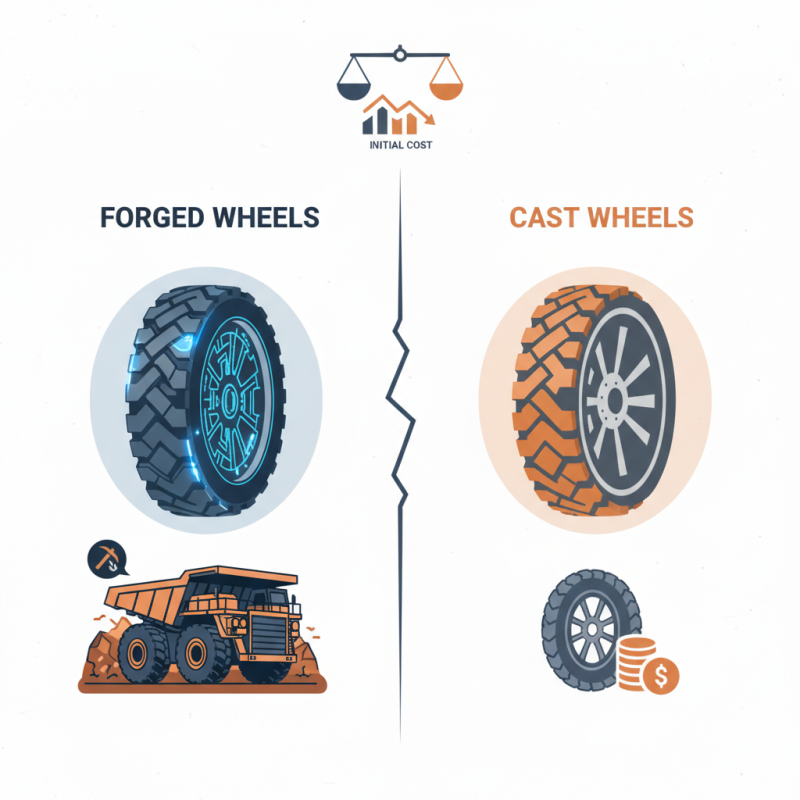
When it comes to mining equipment, the strength of wheels is vital. Mining operations face harsh conditions. This raises an important question: "Why are forged wheels stronger than cast wheels for mining?"
Forged wheels undergo a specialized manufacturing process. This enhances their density and structural integrity. The impact on performance is significant. Forged wheels can withstand heavy loads. They also resist deformation better than cast wheels. This makes them ideal for mining machinery.
However, not every operation chooses forged wheels. Some may lean toward cast wheels due to cost. The initial investment for forged wheels is higher. This choice merits reflection. Balancing cost against durability is crucial in mining logistics. Ultimately, understanding these differences can lead to better decision-making in choosing the right wheels for mining operations.
Advantages of Forged Wheels Over Cast Wheels in Mining Applications
Forged wheels are increasingly favored in mining applications due to their superior strength and durability. The manufacturing process involves shaping metal under extreme pressure, which aligns the grain structure of the material. This results in wheels that can withstand heavy loads and rough terrains far better than cast alternatives. Forged wheels often have a higher tensile strength, making them less likely to crack or deform under stress.
One notable advantage of forged wheels is their impact resistance. They can absorb shocks from sudden loads without showing permanent damage. In the harsh conditions of mining operations, where equipment is constantly subjected to extreme forces, this resilience can prevent costly downtime. Despite their advantages, forged wheels may come at a higher initial cost. However, over time, this investment often pays off through reduced maintenance and replacement needs.
Operators must consider the balance between cost and performance. While forging offers significant benefits, not every mining operation may require this level of durability. Some applications might still find cast wheels sufficient. Taking time to assess specific needs is crucial. A custom approach ensures optimal performance and cost-efficiency in the long run.
Material Composition: Comparing Alloys Used in Forged vs. Cast Wheels
When it comes to wheels used in mining, the material composition plays a critical role in performance.
Forged wheels are crafted from high-grade alloys that enhance strength and durability. These alloys undergo a heating and shaping process that aligns the grain structure, making them tougher under pressure.
In contrast, cast wheels use a method where molten metal is poured into a mold, leading to a more porous structure. This can lead to weak points that may fail during heavy use.
One key benefit of forged wheels is their resistance to deformation. The forging process not only increases their strength but also reduces weight without sacrificing performance. This is crucial in mining where heavy loads are a daily challenge.
Moreover, the uniform properties of forged alloys contribute to greater load-bearing capabilities.
Tips: Always consider the specific requirements of your operation when selecting wheels. Conduct routine inspections on your equipment.
Downtime can be costly, so proactive maintenance is essential. Understanding the material differences can make a significant impact on your operations.
Take the time to evaluate the long-term benefits of investing in higher-quality materials.
Impact Resistance: How Forged Wheels Perform Under Heavy Loads
In the mining industry, wheels need to withstand extreme conditions. Forged wheels excel in impact resistance compared to cast wheels. A study from the Society of Automotive Engineers indicates that forged wheels can endure up to 30% higher loads. This enhancement comes from a uniform grain structure, which distributes stress more effectively.
Under heavy loads, forged wheels demonstrate remarkable performance. The strength-to-weight ratio is substantial. For instance, a forged wheel may weigh 25% less than its cast counterpart, yet handle more stress. This is crucial, as the mining environment is harsh, with constant vibrations and potential impacts. Reports show that failure rates of forged wheels are significantly lower.
Tip: Regularly inspect wheels for signs of wear. This can prevent costly accidents.
Another consideration is the longevity of forged wheels. They typically last longer than cast wheels in similar applications. However, not every condition suits forged wheels. They may not be necessary for lighter applications. Assessing the specific needs of your operation is vital.
Tip: Always evaluate the load requirements of your vehicles before choosing wheels. This ensures optimal performance.
Manufacturing Process: The Role of Forging in Strength Enhancement
Forged wheels are increasingly favored in the mining industry due to their superior strength. This enhancement comes from the unique manufacturing process involved in forging. Unlike casting, where molten metal is poured into a mold and allowed to solidify, forging involves shaping the material through compressive forces. This process refines the grain structure of the metal, leading to improved mechanical properties.
During forging, the metal is heated and then shaped under high pressure. This action alters the arrangement of the metal’s internal structure. The result is a wheel that can withstand greater stress and resist deformation. Miners rely on this durability, particularly in harsh environments. However, forging is not without its challenges. The initial cost can be higher, and the process demands precision. Mistakes in forging can lead to weaknesses.
Forging’s benefits are evident, but limitations exist. Not every application may justify its higher price. Some may prefer cast wheels for lighter loads, despite their lower strength. Each option has its context and requirements. Careful evaluation and consideration are crucial for selecting the right wheel for specific mining tasks.
Why Are Forged Wheels Stronger Than Cast Wheels in Mining? - Manufacturing Process: The Role of Forging in Strength Enhancement
| Attribute |
Forged Wheels |
Cast Wheels |
| Manufacturing Process |
High-Pressure Forging |
Casting with Mold |
| Material Density |
Higher Density |
Lower Density |
| Strength-to-Weight Ratio |
Superior |
Inferior |
| Fatigue Resistance |
Excellent |
Moderate |
| Production Time |
Longer Due to Forging Process |
Shorter |
| Cost |
Higher |
Lower |
Cost-Benefit Analysis: Long-Term Savings with Forged Wheels in Mining
Forged wheels are increasingly recognized for their strength and durability, especially in mining environments. Their production process involves applying intense pressure to solid metal, resulting in tighter grain structure. This enhances toughness, making forged wheels less prone to cracking under heavy loads. The initial investment in forged wheels might be higher, but their longevity can lead to significant long-term savings.
Regular maintenance costs for machinery can add up quickly. Cast wheels tend to suffer from wear and tear, which necessitates frequent replacements. This can disrupt operations and lead to unplanned downtime. In contrast, forged wheels maintain their integrity over a longer period, reducing both replacement and maintenance fees. Companies often underestimate these hidden costs, which can impact their overall budget and productivity.
Investing in forged wheels may seem daunting at first. However, many mining operations have found that the advantages far outweigh the costs. The difference in performance can also lead to better safety outcomes. Ultimately, choosing the right wheel type can influence an operation’s efficiency and bottom line. Evaluating these factors is essential for any mining business looking to optimize its operations.
FAQS
: Forged wheels excel in impact resistance and can endure higher loads than cast wheels.
Forged wheels can weigh 25% less than cast wheels while handling more stress.
Yes, forged wheels typically last longer in similar applications compared to cast wheels.
Forging shapes metal using pressure, refining its grain structure for improved strength and durability.
Yes, forged wheels may be excessive for lighter applications, where cast wheels could suffice.
Regularly inspect wheels for wear to prevent costly accidents and downtime.
Their longevity and reduced maintenance needs can lead to significant long-term savings.
Yes, mistakes can lead to weaknesses, underscoring the need for precision in manufacturing.
Frequent replacements and maintenance for cast wheels can disrupt operations and affect productivity.
The right wheel choice can enhance efficiency and influence a company's overall budget and safety outcomes.
Conclusion
When considering the question, "Why are forged wheels stronger than cast wheels for mining?", it's essential to examine the advantages of forged wheels in mining applications. Forged wheels are typically made from superior alloys that offer better material composition, leading to enhanced strength and durability. Their manufacturing process, which involves shaping the metal under high pressure, results in a more refined grain structure, improving impact resistance significantly—especially under heavy loads typically encountered in mining environments.
Moreover, while the initial investment in forged wheels may be higher, a cost-benefit analysis reveals that their long-term savings are substantial. The longevity and reduced maintenance associated with forged wheels ultimately make them a more economical choice for mining operations, ensuring that the risks of costly failures and downtime are minimized. This comprehensive understanding underscores why forged wheels are generally preferred over cast wheels in the demanding context of mining.
 DrivePro Auto