 DrivePro Auto
DrivePro Auto
DrivePro Auto
Converting tube-type truck rims to tubeless wheels can improve maintenance efficiency, reduce tube-related failures, and simplify roadside repairs. However, this change is not a simple matter of removing the tube and fitting a tire. Rim design, bead seating, valve placement, load rating, and tire compatibility must work together. A polished rim may still hide corrosion around the bead seat. That matters.
How to convert tube-type rims to tubeless truck wheels? The safest answer begins with identification, not installation. Experienced technicians should confirm the rim profile and manufacturer specifications before choosing any conversion method. Some rims are unsuitable because of damaged flanges, incompatible lock rings, incorrect valve holes, or insufficient structural strength. A professional inspection is essential.
This guide presents ten practical approaches used by qualified fleet and wheel-service professionals. It discusses approved rim replacement, compatible wheel assemblies, sealing requirements, tire selection, inflation procedures, and post-installation checks. The goal is dependable operation, not the fastest workshop result. Small details matter, especially around bead contact and valve sealing.
Standards and equipment manuals should guide every decision. When uncertainty remains, consult the rim manufacturer or a certified wheel specialist. Do not rely on appearance alone. Even experienced teams can rush. That is worth acknowledging.
After installation, technicians should inspect for air loss, uneven bead seating, vibration, and abnormal heat. A controlled pressure test can reveal problems before the truck returns to service. This topic also has limits: no universal adapter fits every tube-type rim. Safe conversion depends on verified compatibility, correct parts, trained workmanship, and honest evaluation of the existing wheel.
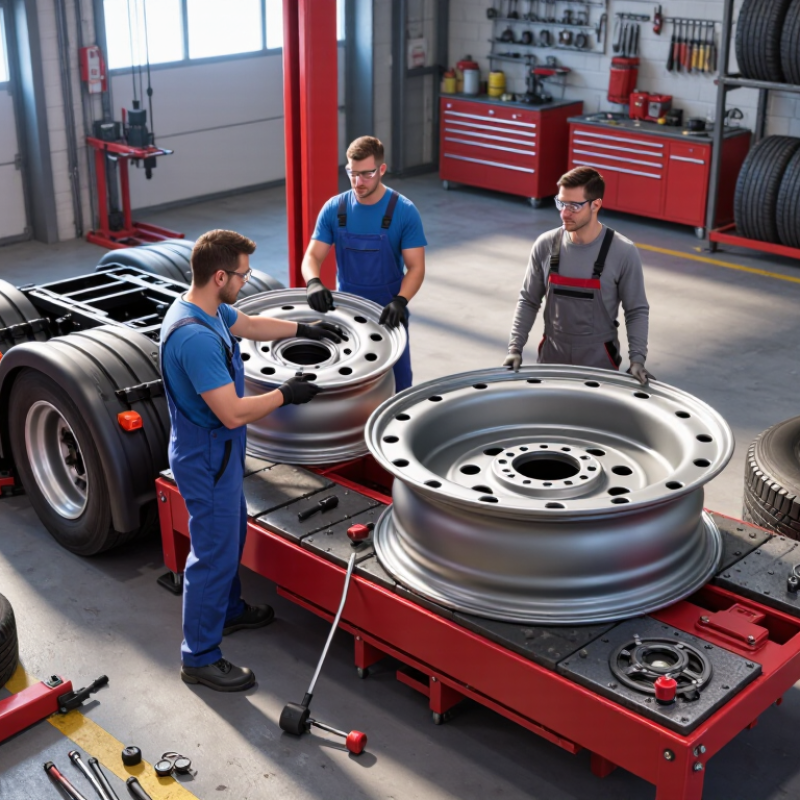
Top 10 Ways to Convert Tube Type Truck Rims to Tubeless Wheels
Assess Tube-Type Rim Compatibility and Conversion Requirements
A tube-type truck rim is not automatically suitable for tubeless service. Its diameter may match, yet the bead seat, flange profile, valve opening, and safety hump can differ. The 2024 Tire and Rim Association Year Book lists these dimensions as separate approval requirements. Therefore, a matching tire size alone proves very little.
Check the rim stamping, measured width, contour, load rating, and maximum cold inflation pressure. Compare every value with the 2024 ETRTO Standards Manual and the tire maker’s technical tables. Multi-piece rims require extra caution. Their lock rings, mating surfaces, and corrosion condition must be inspected by a qualified technician. A damaged groove can release energy violently.
The valve hole also matters. Tubeless valves need the correct angle, seal, and hole diameter. Do not drill or weld the rim. That shortcut can weaken the wheel. Industry maintenance data repeatedly links underinflation and overload with heat buildup and casing damage; NHTSA’s Traffic Safety Facts reports continue to identify tire-related failures as a serious crash factor. The exact risk depends on axle load, speed, pressure, and maintenance.
One practical mistake is assuming every conversion ring is universal. It is not. A conversion may appear stable during a short test, then leak around the bead overnight. Pressure testing, runout checks, and a documented load review are essential. I would reject any rim with unclear markings, deep rust, distorted flanges, or missing service history. Some wheels simply should not be converted.
| # | Assessment or Conversion Path | What to Check or Do | Requirement / Guidance | Safety Note |
|---|---|---|---|---|
| 1 | Identify the wheel construction | Read the wheel markings and determine whether it is a one-piece wheel, a multi-piece rim, or a split rim. | Record size, construction type, load rating, and any applicable wheel standard or manufacturer part information. | Do not infer tubeless suitability from appearance alone. |
| 2 | Check for explicit tubeless approval | Confirm the exact wheel is approved for tubeless service using its markings and authoritative wheel documentation. | Approval must apply to the specific wheel design, size, and intended service—not just to a similar-looking wheel. | If approval cannot be verified, treat the wheel as unsuitable for conversion. |
| 3 | Verify tire-to-rim compatibility | Match the tire’s approved rim diameter and width to the wheel specifications. | Use tire and wheel industry data and the tire maker’s fitment guidance for the exact tire size. | A tire that physically mounts is not necessarily an approved or safe fit. |
| 4 | Inspect the bead seats and flange | Have a qualified technician examine the bead seats, flanges, valve area, and wheel surface for corrosion, cracks, distortion, or damage. | The sealing surfaces must be sound and within the wheel maker’s service limits. | Do not grind, weld, or reshape a wheel to make it seal. |
| 5 | Replace with a purpose-built tubeless wheel | When the existing rim is tube-type only or its status is uncertain, select a compatible wheel designed and approved for tubeless use. | Confirm wheel size, load capacity, offset, bolt pattern, center bore, and vehicle fitment before installation. | This is generally the appropriate route when the original wheel is not approved for tubeless service. |
| 6 | Use an approved wheel assembly or replacement component | For serviceable multi-piece systems, use only an approved configuration and components specified for that wheel assembly. | The complete assembly must be authorized for the intended tire and tubeless application. | Never mix unapproved components or treat a tube-type assembly as tubeless by adding sealant. |
| 7 | Fit the correct tubeless valve | Select a valve that matches the wheel’s valve-hole size, thickness, pressure range, and service requirements. | Install and tighten it according to the valve and wheel manufacturers’ instructions. | A valve change cannot make a non-tubeless wheel suitable for tubeless use. |
| 8 | Confirm vehicle and axle suitability | Check wheel load capacity, tire load index, axle ratings, wheel position, and vehicle-maker fitment requirements. | The complete tire-and-wheel package must meet or exceed the vehicle’s specified requirements. | Do not exceed the lowest applicable tire, wheel, or axle rating. |
| 9 | Have mounting and inflation performed professionally | Use trained personnel with suitable equipment and follow established commercial-vehicle tire service procedures. | Use the specified inflation pressure and approved mounting procedures for the tire and wheel. | Multi-piece rim assemblies can cause severe injury if handled or inflated incorrectly; follow applicable safety procedures. |
| 10 | Leak-test and document the final setup | After installation, check the valve and bead areas for leakage, verify cold inflation pressure, and record the approved tire-and-wheel combination. | Recheck pressure and condition according to the vehicle and tire service schedule. | A successful leak check does not override a lack of tubeless approval for the wheel. |
Important: A tube-type truck rim should not be made tubeless by adding sealant, tape, or an improvised liner. Use it tubed only as specified, or replace it with a wheel assembly explicitly approved for tubeless service. Confirm fitment and service procedures with qualified tire professionals and authoritative vehicle, tire, and wheel documentation.
No. The rim must have a suitable profile and bead seat for tubeless service. Check its markings, size, and service information. Do not guess.
Inspect the bead seats, valve opening, welds, flanges, and inner surface under bright light. Look for cracks, deep corrosion, rust pits, bends, and old repairs. Small damage can cause slow leaks.
Use a compatible tubeless tire, approved sealing components, and a valve that fits the wheel opening. The system must match the exact rim profile. Household tape and sealant are not reliable substitutes.
Remove corrosion without thinning the metal. Clean the bead seats carefully. Fit the specified sealing system and valve. Stop if the metal looks weakened.
Inflate the assembly to the specified cold pressure in a controlled setting. Apply approved leak-detection solution around the valve, bead, and rim joint. Growing bubbles indicate trouble.
Record the pressure after assembly. Check it again after several hours and after 24 hours. Temperature changes can reveal a quiet leak. My early checks were too brief.
Keep hands clear of the wheel during inflation. Use suitable safety equipment and a safety cage when required. Never inflate a questionable assembly outside protection.
Remove it if pressure drops repeatedly, the bead moves, or new corrosion appears. A qualified technician should verify the wheel’s load suitability before road use. A seal may hold today, then fail under heat.
Converting tube-type truck rims to tubeless wheels requires careful assessment and strict attention to safety. The first step is to confirm that the rim’s design, condition, dimensions, and bead-seat profile are suitable for conversion. The question “How to convert tube-type rims to tubeless truck wheels?” cannot be answered with one universal procedure, because some rims are incompatible or too damaged for safe modification. A suitable conversion method must be selected, using the correct valve, sealing components, rim preparation tools, and tire specifications.
The rim should be cleaned, inspected for corrosion or deformation, and professionally sealed or modified without weakening its structure. The tire, valve, and sealing system must be installed correctly to prevent leaks and bead failure. After inflation, the wheel should undergo an air-retention test and a thorough inspection for slow leaks or movement. Regular pressure checks, damage inspections, and maintenance are essential. Because wheel and tire failures can cause serious accidents, any conversion should follow applicable technical requirements and be completed or verified by a qualified wheel specialist.
